Scottsville’s L&N Depot to Hold Fundraiser
By Chris Cole,
Staff Writer
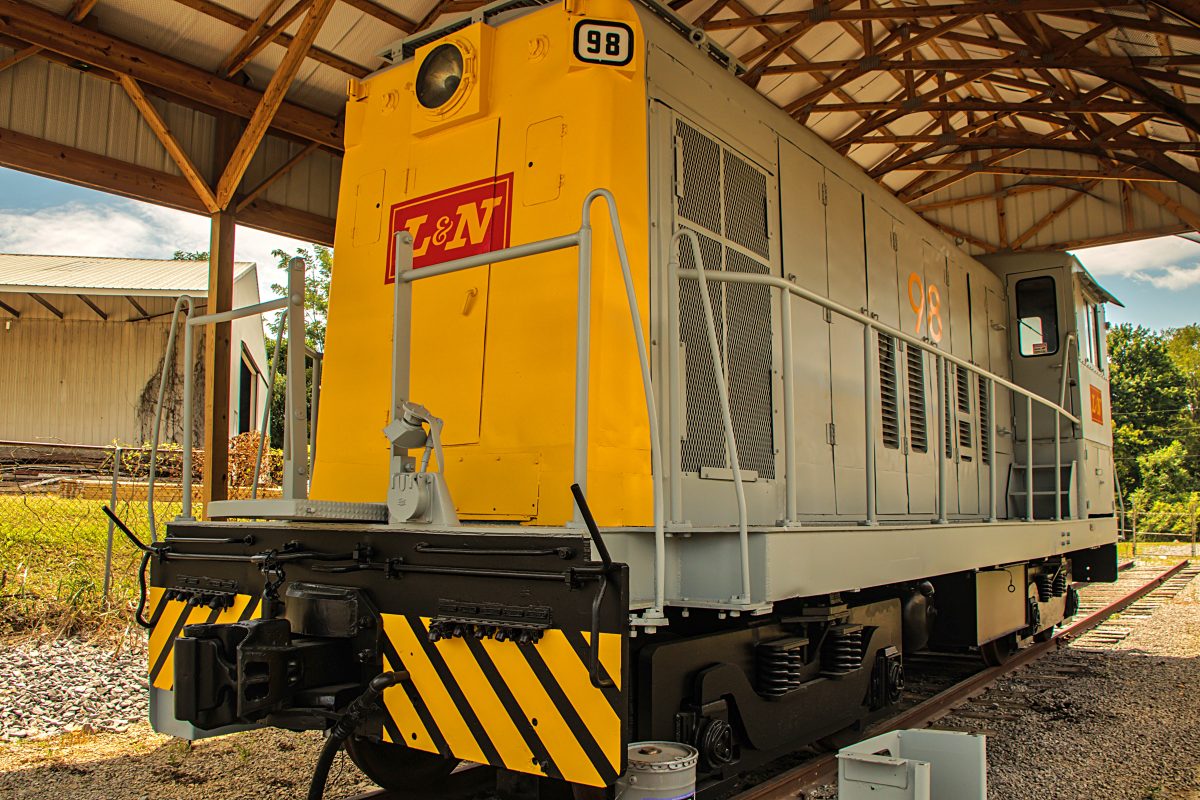
One of the biggest boosts that has helped spur on the restoration efforts of the old L&N depot is the return of one of the engines that served it. L&N 98 is a General Electric (GE) 70-ton “yard switcher” type engine that was built in July of 1947. 98 was found in the possession of a private owner in Nashville and the Friends of the Scottsville L&N Depot were able to make an arrangement to put it on display at the depot. It has recently been repainted to its original L&N colors and is awaiting a couple minor additions. In total only 238 GE 70-ton engines were ever built with the L&N purchasing two of them, making L&N 98 very rare.
The work on the old Louisville and Nashville (L&N) Railroad Depot along main street in Scottsville has been coming along, albeit slowly. A few months back, the group overseeing its restoration was able to buy the land just in front of the building that once had the rotating platform that would orient the engines traversing the tracks and have excavated nearly two-thirds of the trough it used. Additionally, the old yard switcher diesel engine that will be on display has been repainted to its L&N colors and is awaiting some final touches.
While this is certainly encouraging and has been a long time in the making, there’s still one aspect of the depot itself that needs to be not just redone but completely rebuilt.
“The focus now is back on rebuilding the two story passenger station,” said Dr. Mark Huntsman, the man who has perhaps had the most influence in the restoration effort for the depot.
To help raise funds for that work, Dr. Huntsman said there would be a “steak sandwich sale” in which the “money we earn from that will be applied to the reconstruction of the passenger station.” The steak sandwich sale will take place at Allen County Farmers Service on Friday, Aug. 23 from 8:30 a.m. until “1 or we run out of steaks, whichever comes first.”
Dr. Huntsman also stated that other avenues of funding through state and federal grants have been explored but ultimately those were not pursued.
“We abandoned the state administered federal funding…we got that grant before COVID and subsequently the material and labor costs increased so much that the bids that were coming in for the two story part were more than three times what our grant money was,” he said while adding that “we are looking at other options (like) private foundations and sources that don’t have all the (red tape). There are so many things that add to the cost with federal grants that we’re better off going another route.”
With this project, Dr. Huntsman has stated there’s some excitement among L&N Railroad historians and enthusiasts along with various railroad preservationist groups who have heard about this ongoing project.
“We’ve got a lot of enthusiasm, particularly regionally and some national interest,” he stated.
This is for good reason as it is easy to forget how integral the railroad, especially one such as the L&N, was to our country.
Founded in March of 1850, the L&N would eventually connect its two namesake cities (Louisville and Nashville) in October of 1859. At various times it served both the Union and Confederate sides of the Civil War and was able to expand its reach by the 1890s through both the laying of new lines and the acquisitions of smaller, regional railroads. The L&N would go on to serve such cities as Memphis, St. Louis, Cincinnati, Birmingham, Montgomery, Pensacola and New Orleans. It was during this time in 1886 that Scottsville’s depot opened to the public and became part of the L&N.
The 20th century would see further expansion into places such as Chicago, Evansville and Atlanta, along with more rural areas of each of the states the railroad served. Often this provided a big economic boost for smaller cities and towns such as Scottsville, as they could transport natural resources such as coal and oil economically. By 1971 the L&N managed over 6,574 miles of rails in 13 out of the 50 states.
The mid 1970s would see the end of the L&N in Scottsville with local business leaders believing it wasn’t worth the cost to maintain the rails while highways were being constructed and trucking was becoming more economical. The L&N itself would be made into a subsidiary of Seaboard Coastline Railroad at the very end of 1982. Eventually, the Seaboard Coastline Railroad would itself become a subsidiary of CSX Transportation in 1986.
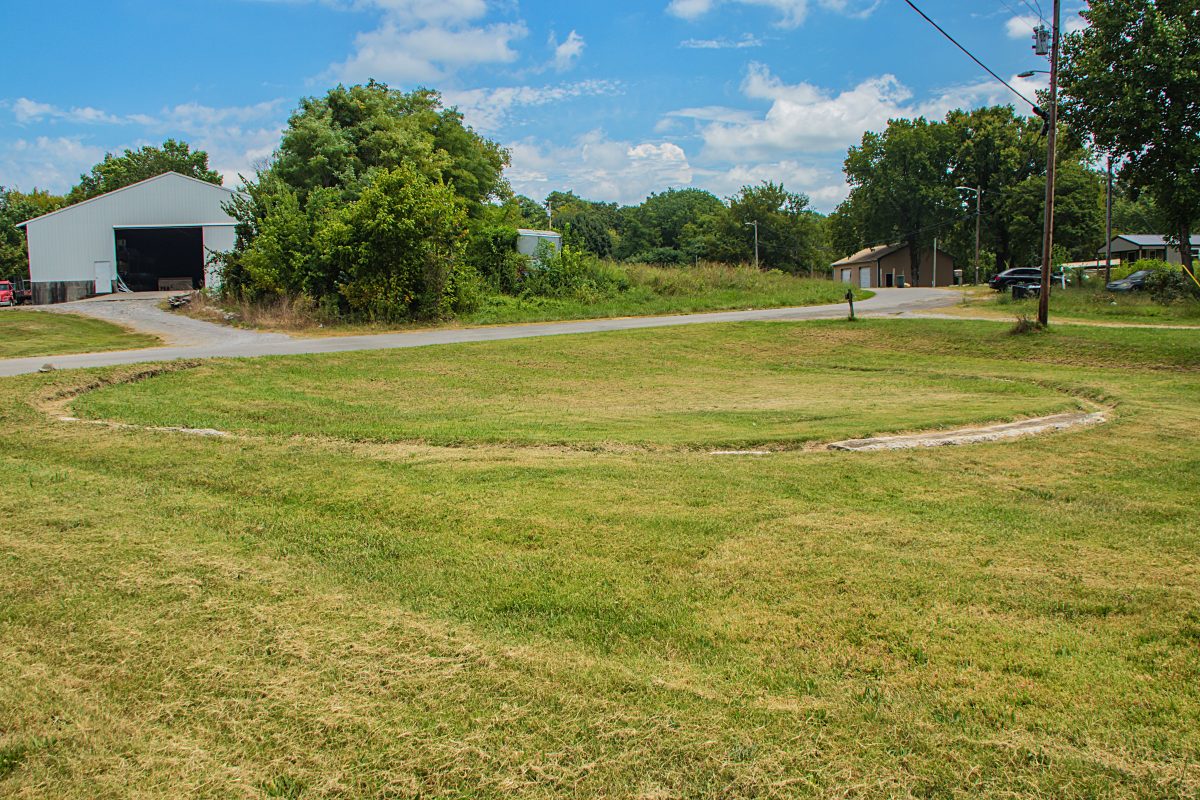
Earlier this year the Friends of the Scottsville L&N Depot were able to purchase the land in front of the depot that once held the turntable. It would rotate the engines 180 degrees so that they could be oriented in the correct direction the engine needed to face. While the turntable itself is long gone, the trough which helped it rotate is roughly two-thirds excavated.
Though ultimately a small but important part of one of the most expansive and important railroads in our nation’s history, the importance of the old L&N depot should not be forgotten.
In the meantime the group is in the process of collecting bids for the reconstruction of the two story portion of the depot that has to be rebuilt. “Hopefully we’ll know more by late Fall,” said Dr. Huntsman, in order to “know exactly how much money we’ll need to ask for from the foundations we’re working with.”
The exact plans for the two story reconstruction include being “a museum with some space for small group gatherings,” said Dr. Huntsman. “We’ve accumulated a lot of railroad memorabilia and history of the rail line in Allen County that we want to display and acquaint folks with how important it was in the time it existed here.”
The Friends of the Scottsville L&N Depot, the preservation/restoration group behind the work currently being done, operates a website (scottsvilletraindepot.com) and is always looking for volunteers to join them in their efforts. You can also find them on Facebook by searching for Scottsville Train Depot or at https://www.facebook.com/scottsvilletraindepot.